

Time:2026-10-26
| Generic name | Lazertinib Mesylate Tablets |
| Brand name | LAZCLUZE® |
| Molecular formula | C30H34N6O3 · CH4O3S · H2O |
| Molecular weight | 668.77 g/mol |
| CAS | 2411549-88-5 (mesylate monohydrate); 1903008-80-9 (free base) |
| Chemical name | N-[5-[[4-[4-[(dimethylamino)methyl]-3-phenyl-1H-pyrazol-1-yl]pyrimidin-2-yl]amino]-4-methoxy-2-(morpholin-4-yl)phenyl]prop-2-enamide methanesulfonate hydrate (1:1:1) |
In August 2025 lazertinib (LAZCLUZE®) was approved in China in combination with amivantamab (RYBREVANT®) for first-line treatment of adults with locally advanced or metastatic non-small cell lung cancer (NSCLC) whose tumours carry EGFR exon 19 deletions or exon 21 L858R substitutions. The compound patent is not the main obstacle — before you commit, work through these five barriers.
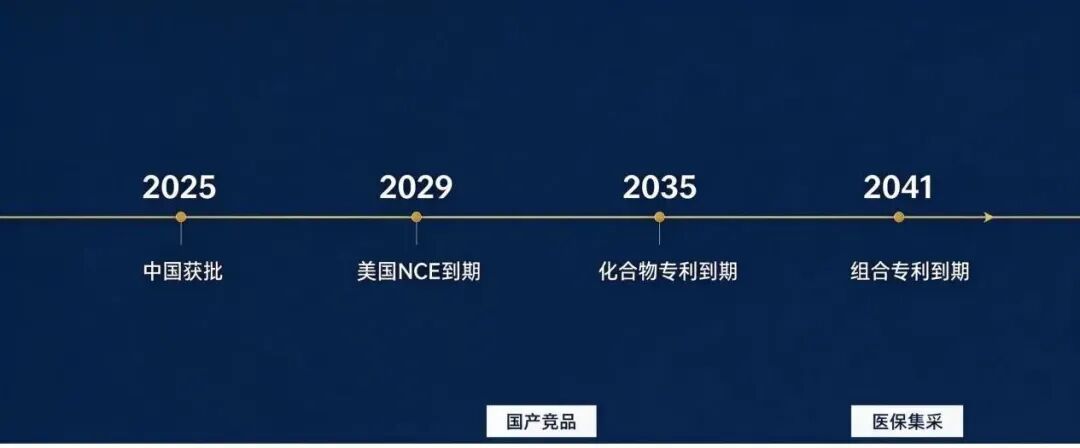
▪ NCE exclusivity runs to August 2029.
▪ The US Orange Book lists nine patents; the earliest compound patent expires in October 2035 (US9593098 and others)
▪ The “third-generation EGFR TKI therapy / combination therapy” method-of-use patent runs to August 2041 (US11850248)
▪ The Chinese compound patent remains in force; confirm the exact expiry date against official CNIPA data
A generic can only enter after expiry or a successful challenge — run a dedicated FTO search and do not rely on second-hand conclusions. Note in particular that the approved Chinese regimen is lazertinib plus amivantamab: combination and biologics patents stack on top of each other, making the entry window more complex than a single-agent generic.
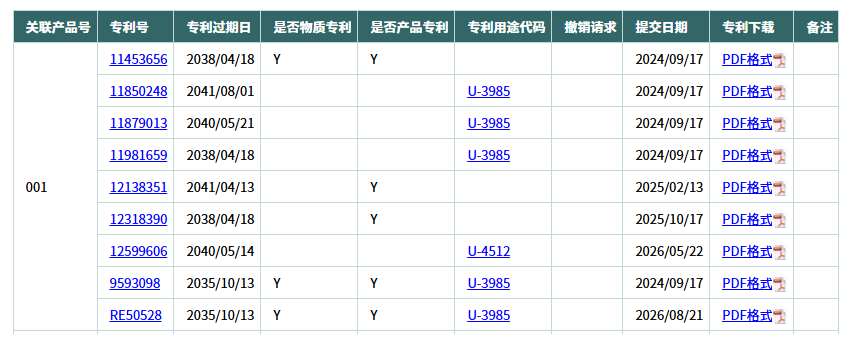
The approved Chinese strength is 80 mg (calculated as free base); the recommended dose is 240 mg once daily orally. The active substance is lazertinib mesylate monohydrate, with excipients including mannitol, croscarmellose sodium, microcrystalline cellulose, magnesium stearate and hydrophobic colloidal silica (per the Chinese label).
The mesylate salt means a generic must design around salt-form and polymorph patents and, at the same time, evaluate mesylate ester genotoxic impurities.
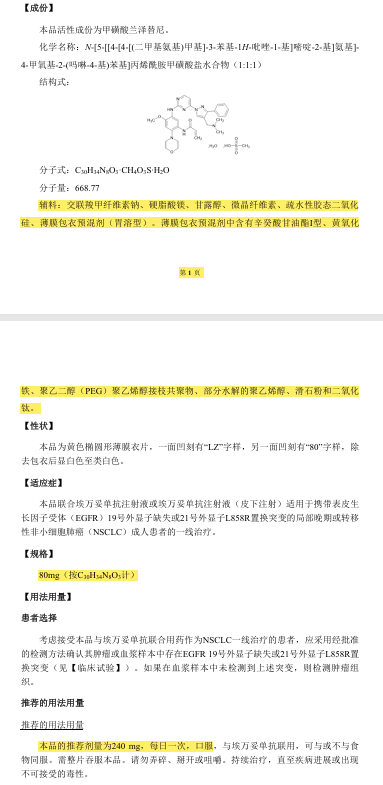
No pharmacopoeia covers the molecule, so the profile must be built from scratch. The molecule carries two structural alerts:
• An acrylamide “covalent warhead” — the structural element of irreversible EGFR inhibitors
• The mesylate salt form
Process, degradation and genotoxic impurities all need standards — none can be skipped. Coverage typically requires five to six process impurities, two alkyl halide precursors, three alkyl mesylates, two to three nitrosamine precursors and degradation products such as N-oxides. An assay-standard API reference alone is not enough; genotoxic impurity standards usually have to be custom-synthesised. Without a defensible impurity profile, stability studies, method validation and the CTD cannot proceed.
Lead times for reference standards routinely hold up programmes. Three things to check in a supplier:
✅ Purity and a complete analytical data package
✅ ISO 17034 quality system accreditation
✅ Capability to custom-synthesise
Osimertinib has dominated the third-generation EGFR-TKI market in China since 2017, and domestic players have been launching steadily: aumolertinib (2020), furmonertinib (2021/2022), befotertinib (2023) and limertinib (2025) have all been approved and reimbursed.
The first domestic generic of osimertinib (Jiangsu Wanbang) is already approved. On the originator side, the amivantamab plus lazertinib combination picked up several indications in 2025, and the subcutaneous form of amivantamab (RYBREVANT FASPRO™) was approved by the FDA in December 2025, with Chinese launch timing pending an official NMPA announcement.
On the payment side, amivantamab has passed the preliminary review of the 2025 national innovative drug commercial insurance catalogue.
Originator upgrades, domestic competitors and reimbursement or volume-based procurement access — all three lines belong on one timeline.
In one sentence: whether you can genericise, and when, depends on a risk map — patent FTO plus impurity profile. Draw the map first, then set the pace.
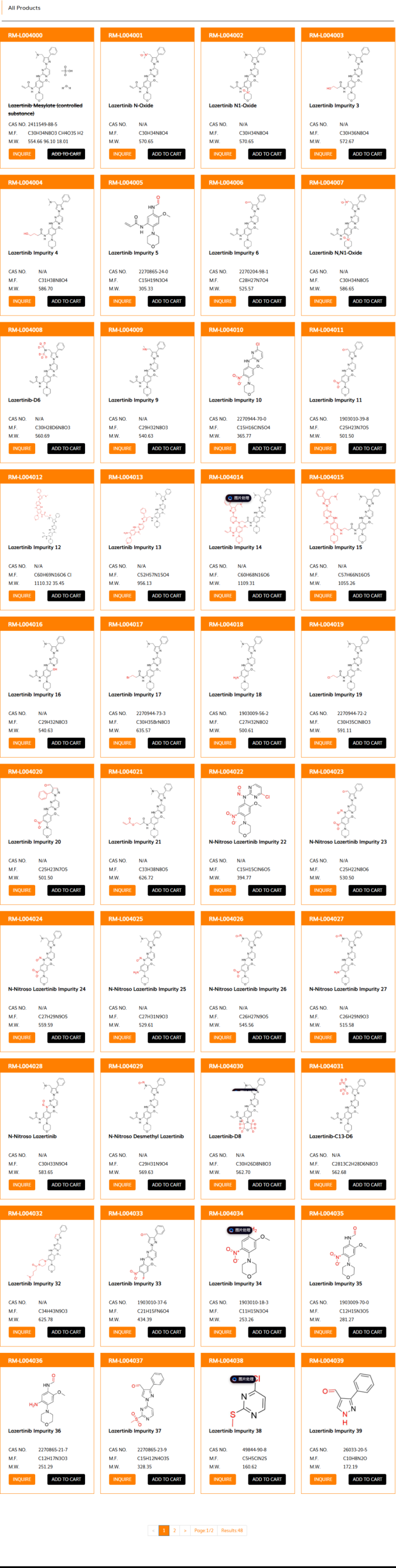
View the full lazertinib standard range →
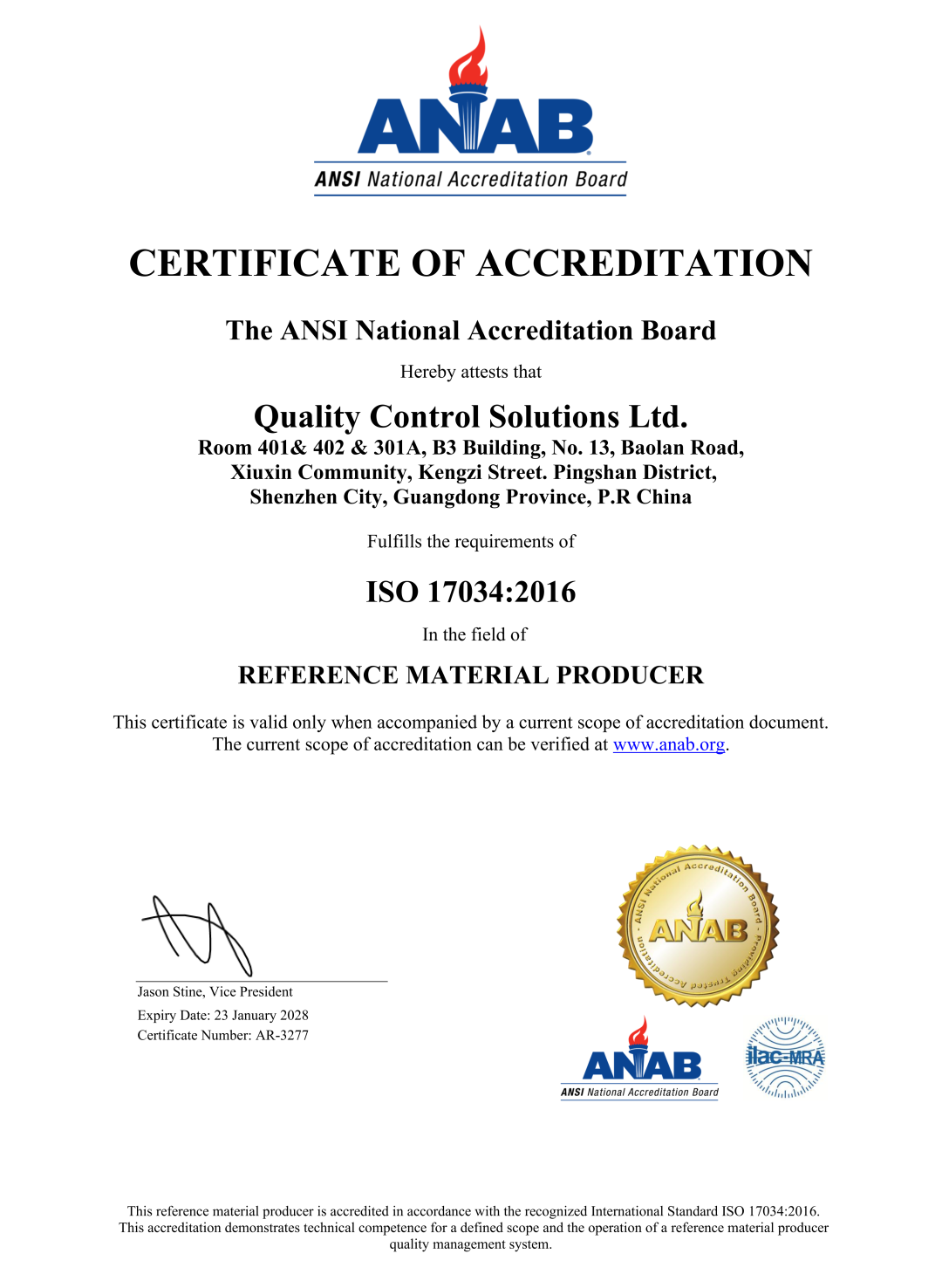
ANAB ISO 17034 QCS holds ANAB ISO 17034 accreditation. Our reference standard production and value assignment processes meet the international requirements for competence of reference material producers, providing data with international mutual recognition for NMPA, EMA and FDA submissions.
| Generic name | Lazertinib Mesylate Tablets |
| Brand name | LAZCLUZE® |
| Molecular formula | C30H34N6O3 · CH4O3S · H2O |
| Molecular weight | 668.77 g/mol |
| CAS | 2411549-88-5 (mesylate monohydrate); 1903008-80-9 (free base) |
| Chemical name | N-[5-[[4-[4-[(dimethylamino)methyl]-3-phenyl-1H-pyrazol-1-yl]pyrimidin-2-yl]amino]-4-methoxy-2-(morpholin-4-yl)phenyl]prop-2-enamide methanesulfonate hydrate (1:1:1) |
In August 2025 lazertinib (LAZCLUZE®) was approved in China in combination with amivantamab (RYBREVANT®) for first-line treatment of adults with locally advanced or metastatic non-small cell lung cancer (NSCLC) whose tumours carry EGFR exon 19 deletions or exon 21 L858R substitutions. The compound patent is not the main obstacle — before you commit, work through these five barriers.
▪ NCE exclusivity runs to August 2029.
▪ The US Orange Book lists nine patents; the earliest compound patent expires in October 2035 (US9593098 and others)
▪ The “third-generation EGFR TKI therapy / combination therapy” method-of-use patent runs to August 2041 (US11850248)
▪ The Chinese compound patent remains in force; confirm the exact expiry date against official CNIPA data
A generic can only enter after expiry or a successful challenge — run a dedicated FTO search and do not rely on second-hand conclusions. Note in particular that the approved Chinese regimen is lazertinib plus amivantamab: combination and biologics patents stack on top of each other, making the entry window more complex than a single-agent generic.
The approved Chinese strength is 80 mg (calculated as free base); the recommended dose is 240 mg once daily orally. The active substance is lazertinib mesylate monohydrate, with excipients including mannitol, croscarmellose sodium, microcrystalline cellulose, magnesium stearate and hydrophobic colloidal silica (per the Chinese label).
The mesylate salt means a generic must design around salt-form and polymorph patents and, at the same time, evaluate mesylate ester genotoxic impurities.
No pharmacopoeia covers the molecule, so the profile must be built from scratch. The molecule carries two structural alerts:
• An acrylamide “covalent warhead” — the structural element of irreversible EGFR inhibitors
• The mesylate salt form
Process, degradation and genotoxic impurities all need standards — none can be skipped. Coverage typically requires five to six process impurities, two alkyl halide precursors, three alkyl mesylates, two to three nitrosamine precursors and degradation products such as N-oxides. An assay-standard API reference alone is not enough; genotoxic impurity standards usually have to be custom-synthesised. Without a defensible impurity profile, stability studies, method validation and the CTD cannot proceed.
Lead times for reference standards routinely hold up programmes. Three things to check in a supplier:
✅ Purity and a complete analytical data package
✅ ISO 17034 quality system accreditation
✅ Capability to custom-synthesise
Osimertinib has dominated the third-generation EGFR-TKI market in China since 2017, and domestic players have been launching steadily: aumolertinib (2020), furmonertinib (2021/2022), befotertinib (2023) and limertinib (2025) have all been approved and reimbursed.
The first domestic generic of osimertinib (Jiangsu Wanbang) is already approved. On the originator side, the amivantamab plus lazertinib combination picked up several indications in 2025, and the subcutaneous form of amivantamab (RYBREVANT FASPRO™) was approved by the FDA in December 2025, with Chinese launch timing pending an official NMPA announcement.
On the payment side, amivantamab has passed the preliminary review of the 2025 national innovative drug commercial insurance catalogue.
Originator upgrades, domestic competitors and reimbursement or volume-based procurement access — all three lines belong on one timeline.
In one sentence: whether you can genericise, and when, depends on a risk map — patent FTO plus impurity profile. Draw the map first, then set the pace.
View the full lazertinib standard range →
ANAB ISO 17034 QCS holds ANAB ISO 17034 accreditation. Our reference standard production and value assignment processes meet the international requirements for competence of reference material producers, providing data with international mutual recognition for NMPA, EMA and FDA submissions.
Join Our Email List
Subscribe to receive updates on new
products, promotions and resources!
Join Our Email List
Subscribe to receive updates on new
products, promotions and resources!
| ISO 17034:2016 |  |
| ISO 9001:2015 | |






 |
 |
 |
*All our products are for R&D.
|
|
|
*All our products are for R&D.
Copyright © 2021-2024 QCSRM All rights reserved. 粤ICP备2023004355号
Copyright © 2021-2024 QCSRM All rights reserved.
粤ICP备2023004355号