

Time:2026-07-07

Tirzepatide is a GIP/GLP-1 dual-receptor agonist developed by Eli Lilly. In 2025, its original formulation achieved outstanding annual sales performance, firmly establishing itself as a leading product in the GLP-1 therapeutic category.
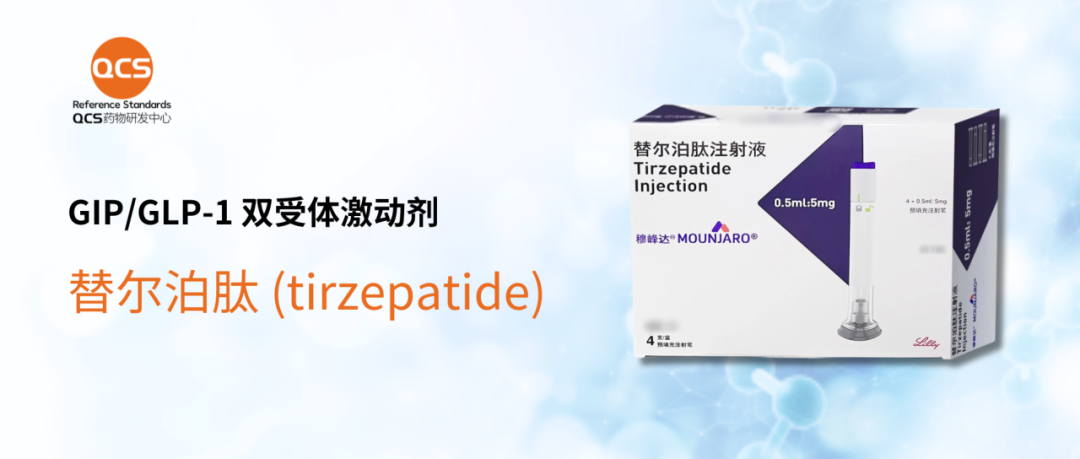
However, tempted by the massive market demand, the U.S. pharmaceutical market has become plagued by numerous irregularities. Numerous compound pharmacies, telemedicine companies, and medical aesthetics institutions operate under the guise of "personalized medication," combining terbuplazole with vitamin B12 (mecobalamin, hydroxycobalamin, or cyanocobalamin) to produce so-called "compound terbuplazole" formulations for sale. These products are marketed as offering lower prices and superior efficacy compared to the FDA-approved originator drugs, yet their precise formulation ratios, safety profiles, and therapeutic effects have not undergone standardized validation.
On March 12,2026, Eli Lilly published an open letter on its official website issuing a safety warning to clinical healthcare institutions and all patients.
Lilly conducted specialized testing on the terip肽-B12 combination preparations available in the U.S. market, revealing significant safety concerns: terip肽 can undergo spontaneous chemical reactions with vitamin B12 to form a novel, previously unreported covalent impurity. This covalent impurity was detected in all 10 commercially available samples tested, with its peak concentration accounting for up to 10% of the total peptide content.
01 The Revelation of Impurities: UPLC-MS Provides the Final Diagnosis
The Eli Lilly R&D team simultaneously published a peer-reviewed original paper in Expert Opinion on Drug Safety, comprehensively characterizing the chemical structure of this impurity.
The research team conducted UPLC-MS chromatographic comparison tests on both commercially available compound samples and the FDA-approved pure teriparatide active pharmaceutical ingredient.
The comparative results showed significant differences (Figure 1): The chromatographic baseline of pure telipopeptide API was stable, exhibiting only the main telipopeptide peak with no additional peaks; the blended samples containing vitamin B12 exhibited multiple additional peaks: Peak 1 represented free vitamin B12, and Peak 2 corresponded to the excipient benzyl alcohol; the key risk peak was Peak 3 at a retention time of 28.08 minutes, which was entirely absent in pure telipopeptide API.
Upon magnification of the chromatogram, it is evident that impurity peak 3 closely coincides with the main peak of tilapopeptide (peak 4, retention time 28.37 minutes), and the two peaks cannot be effectively separated under conventional liquid chromatography conditions.
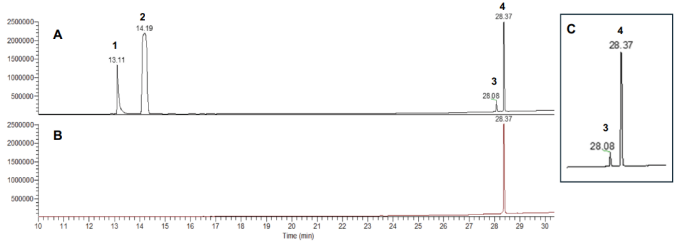
Figure 1. (A) Telbupertide plus vitamin B12 combination preparation; (B) UPLC-MS chromatogram of pure telbupertide active pharmaceutical ingredient; (C) Amplified view of peaks 3 and 4 in Figure A. Peak identification: 1) Vitamin B12; 2) Benzyl alcohol; 3) Vitamin B12-telbupertide covalent adduct; 4) Telbupertide. Peaks 1, 2, and 3 are not present in the pure telbupertide active pharmaceutical ingredient.
Using high-resolution mass spectrometry for precise molecular weight determination, combined with the structural inference based on Figure 2, the research team identified the chemical nature of impurity peak 3.
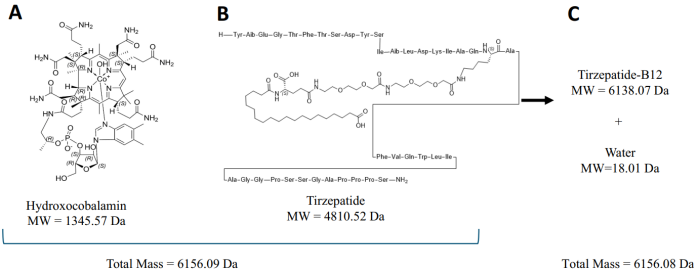
Figure 2: The reaction scheme provides a detailed illustration of the formation process of the B12-telboprost adduct. (A) shows the structure of hydroxycobalamin; (B) shows the structure of telboprost; (C) shows the condensation product, telboprost-B12 adduct.
l The measured molecular weight of this unknown impurity using high-resolution mass spectrometry is 6138.07 Da.;
l Isotope-specific molecular weights of the raw materials: teriparatide 4810.52 Da, hydroxycobalamin 1345.57 Da, water molecule 18.01 Da。
The theoretical molecular weight calculation formula is: 4810.52 + 1345.57 − 18.01 = 6138.08 Da. The theoretical value differs from the mass spectrometry measured value by only 0.01 Da, which falls within the normal precision error range of high-resolution mass spectrometers, and the data are fully consistent.
These data confirm that one molecule of hydroxycobalamin undergoes a condensation reaction with one molecule of terip肽, releasing one water molecule to form the highly stable terip肽-B12 covalent adduct, which corresponds to impurity peak 3 detected by chromatography.
02 NMR experiments reveal structural changes
UPLC-MS was employed for impurity characterization, while multiple NMR experiments further validated the spatial conformational changes of tisleptide following molecular binding. The Eli Lilly team utilized four distinct NMR detection protocols, with multidimensional data providing cross-validation that the binding of vitamin B12 to tisleptide permanently alters the peptide molecular structure.
One-dimensional diffusion filtering NMR (Figure 3): The NMR signal of B12 in the mixed system exhibits a significant shift, which occurs only when the two molecules are stably bound; two-dimensional ¹H–¹³C HSQC experiments (Figure 4) detected a novel resonance peak for B12 in the mixed sample, demonstrating that the B12 molecule adopts a distinct spatial conformation upon binding.
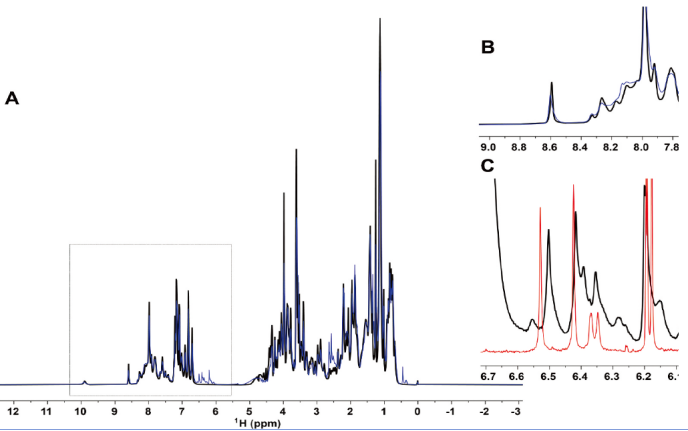
Figure 3. One-dimensional diffusion filtering proton nuclear magnetic resonance (NMR) spectroscopy confirms the molecular interaction between tilperidine and vitamin B12. Black curve: pure tilperidine; red curve: pure vitamin B12; blue curve: mixture sample at a 1:1 molar ratio. A represents the complete proton spectrum, B denotes the amide proton region, and C shows the characteristic resonance region of vitamin B12.
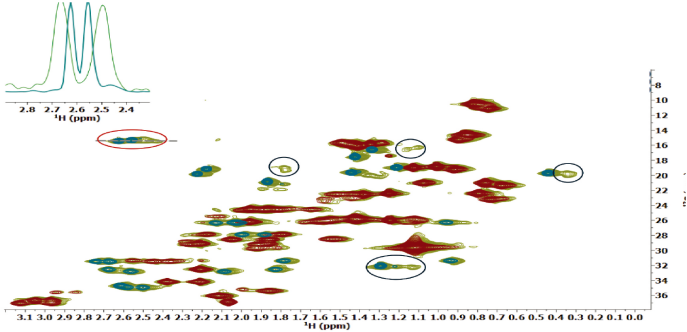
Figure 4. Two-dimensional ¹H-¹³C HSQC NMR spectra confirm their interaction. Magenta: pure tilperide; Blue: pure vitamin B12; Green: 1:1 mixture sample. The localized magnification in the upper left corner clearly demonstrates significant alterations in the peak shape and chemical shift of vitamin B12.
The key evidence is the two-dimensional ¹H-¹⁵N HSQC peptide fingerprint spectrum (Figure 5), a technique highly sensitive to the structure of the peptide's amide backbone, where alterations in secondary and tertiary molecular conformations directly modify peak signals. The spectrum demonstrates that upon addition of B12, a significant number of characteristic peaks of terip肽 disappear, confirming an irreversible change in the peptide's spatial conformation.
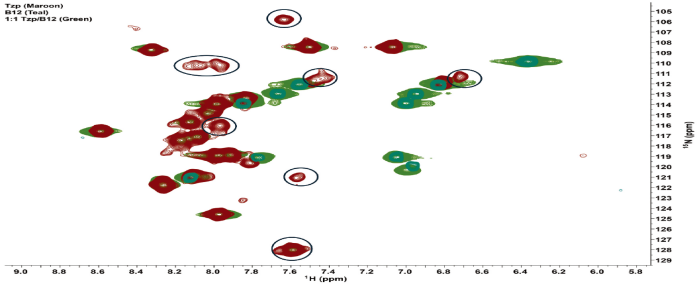
Figure 5. Two-dimensional ¹H-¹⁵N HSQC NMR spectroscopy demonstrates structural changes in tilperide after binding to vitamin B12. The magenta peak: pure tilperide; the cyan peak: pure vitamin B12; the green peak: 1:1 mixture sample.
Diffusion nuclear magnetic resonance and relaxation time data further corroborate the molecular interactions.

The T1/T2 ratio of B12 increased from 3.15 to 12.32, representing a nearly threefold rise; the ratio of teriparatide rose from 33.86 to 42.11. The molecular diffusion rates in both groups decreased simultaneously, indicating an increase in the hydrodynamic volume of the composite molecule and a slowdown in molecular tumbling rates within the solution, consistent with the physicochemical characteristics of stable covalent adducts.
The four sets of MRI examination data mutually corroborate each other, forming a complete chain of evidence that demonstrates telbupertide forms a stable covalent bond with hydroxycobalamin and alters the natural conformation of the peptide.
03 Unknown Multiple Security Risks
No validation data are available regarding the safety impact of this additive impurity on humans; neither short-term nor long-term risks can be assessed.
The open letter from Eli Lilly explicitly states: Currently, there are no available research data regarding the short-term/long-term toxicity of this impurity to humans, its binding capacity to GIP/GLP-1 receptors, immunogenicity, or its absorption, distribution, metabolism, and excretion in vivo; all potential effects remain unknown.
The accumulation of multiple unknown risks poses significant safety hazards.
First, there is a risk of uncontrollable variability in pharmacological efficacy. NMR data confirm that terip肽 undergoes spatial structural changes upon binding to vitamin B12; the tertiary structure of the peptide directly determines its pharmacological activity. Structural variations can lead to fluctuations in receptor binding affinity, potentially resulting in reduced efficacy, abnormally enhanced effects, or even entirely novel unexpected pharmacological actions.
Second, the risk of immunogenicity is elevated. When the peptide drug terip肽 undergoes covalent modification with exogenous small-molecule hydroxycobalamin, its overall molecular weight significantly increases, making it more prone to induce an immune response in humans and generate specific antibodies. This may result in drug failure at mild cases or severe systemic allergic reactions at advanced stages.
Third, the pharmacokinetic behavior in vivo is entirely unpredictable. An increase in molecular weight from 4810.52 Da to 6138.07 Da, combined with conformational changes, can fundamentally alter drug absorption, tissue distribution, metabolism, and elimination pathways. There is no evidence supporting variations in the retention duration, accumulation sites, or clearance mechanisms of impurities within the human body.
Fourth, there are regulatory gaps in oversight. Manufacturers of self-formulated combination preparations are not required to conduct mandatory adverse event monitoring or reporting; although the FDA FAERS database has recorded hundreds of adverse events related to combined teriparatide formulations, the actual incidence rate is significantly higher than reported data, with a substantial number of adverse reactions remaining unreported by regulatory authorities.
04 epilogue, peroration
The arbitrary combination of terip肽 and vitamin B12 does not constitute a rationally designed compound preparation, but rather an informal human trial conducted under regulatory loopholes without any safety evaluation, involving a large cohort of general patients.
The predominant unknown covalent impurities account for up to 10% of the total peptide composition, accompanied by altered molecular structures with completely unknown pharmacological and toxicological properties. These impurities enter the human body directly via injectable formulations, yet no definitive conclusions have been established regarding their short-term or long-term health impacts. The identification of tiramalide-B12 impurities serves as a quality warning for all peptide-based formulation systems. Random mixing of complex biological peptides with various excipients readily leads to the spontaneous formation of novel impurities with unidentified structures and potential safety hazards.
If you are conducting research on complex peptide formulations and encounter challenges related to the study of unknown impurities, please feel free to share your requirements. The QCS Drug Research and Development Center specializes in drug reference standards and impurity studies, dedicated to providing the global pharmaceutical industry with high-purity, traceable, standardized drug reference standards and specialized small-molecule solutions. With the mission of "making medicines safer," we are committed to collaborating with you in advancing the safe development of pharmaceutical research.
reference documentation:
[1] Jordan B, Arbogast L, Clemens M, et al. A novel, widespread impurity in mass-compounded tirzepatide/B12 products[J]. Expert Opinion on Drug Safety, 2026, 25(5):837-845.https://doi.org/10.1080/14740338.2026.2663185
[2] Eli Lilly and Company. An open letter warning of potential patient safety risks associated with tirzepatide compounded with vitamin B12[EB/OL]. 2026-03-12.
The QCS Drug Research and Development Center remains committed to advancing impurity research and provides comprehensive impurity reference standards required for quality control throughout a drug's entire lifecycle. For further product information, please feel free to contact us.


Tirzepatide is a GIP/GLP-1 dual-receptor agonist developed by Eli Lilly. In 2025, its original formulation achieved outstanding annual sales performance, firmly establishing itself as a leading product in the GLP-1 therapeutic category.
However, tempted by the massive market demand, the U.S. pharmaceutical market has become plagued by numerous irregularities. Numerous compound pharmacies, telemedicine companies, and medical aesthetics institutions operate under the guise of "personalized medication," combining terbuplazole with vitamin B12 (mecobalamin, hydroxycobalamin, or cyanocobalamin) to produce so-called "compound terbuplazole" formulations for sale. These products are marketed as offering lower prices and superior efficacy compared to the FDA-approved originator drugs, yet their precise formulation ratios, safety profiles, and therapeutic effects have not undergone standardized validation.
On March 12,2026, Eli Lilly published an open letter on its official website issuing a safety warning to clinical healthcare institutions and all patients.
Lilly conducted specialized testing on the terip肽-B12 combination preparations available in the U.S. market, revealing significant safety concerns: terip肽 can undergo spontaneous chemical reactions with vitamin B12 to form a novel, previously unreported covalent impurity. This covalent impurity was detected in all 10 commercially available samples tested, with its peak concentration accounting for up to 10% of the total peptide content.
01 The Revelation of Impurities: UPLC-MS Provides the Final Diagnosis
The Eli Lilly R&D team simultaneously published a peer-reviewed original paper in Expert Opinion on Drug Safety, comprehensively characterizing the chemical structure of this impurity.
The research team conducted UPLC-MS chromatographic comparison tests on both commercially available compound samples and the FDA-approved pure teriparatide active pharmaceutical ingredient.
The comparative results showed significant differences (Figure 1): The chromatographic baseline of pure telipopeptide API was stable, exhibiting only the main telipopeptide peak with no additional peaks; the blended samples containing vitamin B12 exhibited multiple additional peaks: Peak 1 represented free vitamin B12, and Peak 2 corresponded to the excipient benzyl alcohol; the key risk peak was Peak 3 at a retention time of 28.08 minutes, which was entirely absent in pure telipopeptide API.
Upon magnification of the chromatogram, it is evident that impurity peak 3 closely coincides with the main peak of tilapopeptide (peak 4, retention time 28.37 minutes), and the two peaks cannot be effectively separated under conventional liquid chromatography conditions.
Figure 1. (A) Telbupertide plus vitamin B12 combination preparation; (B) UPLC-MS chromatogram of pure telbupertide active pharmaceutical ingredient; (C) Amplified view of peaks 3 and 4 in Figure A. Peak identification: 1) Vitamin B12; 2) Benzyl alcohol; 3) Vitamin B12-telbupertide covalent adduct; 4) Telbupertide. Peaks 1, 2, and 3 are not present in the pure telbupertide active pharmaceutical ingredient.
Using high-resolution mass spectrometry for precise molecular weight determination, combined with the structural inference based on Figure 2, the research team identified the chemical nature of impurity peak 3.
Figure 2: The reaction scheme provides a detailed illustration of the formation process of the B12-telboprost adduct. (A) shows the structure of hydroxycobalamin; (B) shows the structure of telboprost; (C) shows the condensation product, telboprost-B12 adduct.
l The measured molecular weight of this unknown impurity using high-resolution mass spectrometry is 6138.07 Da.;
l Isotope-specific molecular weights of the raw materials: teriparatide 4810.52 Da, hydroxycobalamin 1345.57 Da, water molecule 18.01 Da。
The theoretical molecular weight calculation formula is: 4810.52 + 1345.57 − 18.01 = 6138.08 Da. The theoretical value differs from the mass spectrometry measured value by only 0.01 Da, which falls within the normal precision error range of high-resolution mass spectrometers, and the data are fully consistent.
These data confirm that one molecule of hydroxycobalamin undergoes a condensation reaction with one molecule of terip肽, releasing one water molecule to form the highly stable terip肽-B12 covalent adduct, which corresponds to impurity peak 3 detected by chromatography.
02 NMR experiments reveal structural changes
UPLC-MS was employed for impurity characterization, while multiple NMR experiments further validated the spatial conformational changes of tisleptide following molecular binding. The Eli Lilly team utilized four distinct NMR detection protocols, with multidimensional data providing cross-validation that the binding of vitamin B12 to tisleptide permanently alters the peptide molecular structure.
One-dimensional diffusion filtering NMR (Figure 3): The NMR signal of B12 in the mixed system exhibits a significant shift, which occurs only when the two molecules are stably bound; two-dimensional ¹H–¹³C HSQC experiments (Figure 4) detected a novel resonance peak for B12 in the mixed sample, demonstrating that the B12 molecule adopts a distinct spatial conformation upon binding.
Figure 3. One-dimensional diffusion filtering proton nuclear magnetic resonance (NMR) spectroscopy confirms the molecular interaction between tilperidine and vitamin B12. Black curve: pure tilperidine; red curve: pure vitamin B12; blue curve: mixture sample at a 1:1 molar ratio. A represents the complete proton spectrum, B denotes the amide proton region, and C shows the characteristic resonance region of vitamin B12.
Figure 4. Two-dimensional ¹H-¹³C HSQC NMR spectra confirm their interaction. Magenta: pure tilperide; Blue: pure vitamin B12; Green: 1:1 mixture sample. The localized magnification in the upper left corner clearly demonstrates significant alterations in the peak shape and chemical shift of vitamin B12.
The key evidence is the two-dimensional ¹H-¹⁵N HSQC peptide fingerprint spectrum (Figure 5), a technique highly sensitive to the structure of the peptide's amide backbone, where alterations in secondary and tertiary molecular conformations directly modify peak signals. The spectrum demonstrates that upon addition of B12, a significant number of characteristic peaks of terip肽 disappear, confirming an irreversible change in the peptide's spatial conformation.
Figure 5. Two-dimensional ¹H-¹⁵N HSQC NMR spectroscopy demonstrates structural changes in tilperide after binding to vitamin B12. The magenta peak: pure tilperide; the cyan peak: pure vitamin B12; the green peak: 1:1 mixture sample.
Diffusion nuclear magnetic resonance and relaxation time data further corroborate the molecular interactions.
The T1/T2 ratio of B12 increased from 3.15 to 12.32, representing a nearly threefold rise; the ratio of teriparatide rose from 33.86 to 42.11. The molecular diffusion rates in both groups decreased simultaneously, indicating an increase in the hydrodynamic volume of the composite molecule and a slowdown in molecular tumbling rates within the solution, consistent with the physicochemical characteristics of stable covalent adducts.
The four sets of MRI examination data mutually corroborate each other, forming a complete chain of evidence that demonstrates telbupertide forms a stable covalent bond with hydroxycobalamin and alters the natural conformation of the peptide.
03 Unknown Multiple Security Risks
No validation data are available regarding the safety impact of this additive impurity on humans; neither short-term nor long-term risks can be assessed.
The open letter from Eli Lilly explicitly states: Currently, there are no available research data regarding the short-term/long-term toxicity of this impurity to humans, its binding capacity to GIP/GLP-1 receptors, immunogenicity, or its absorption, distribution, metabolism, and excretion in vivo; all potential effects remain unknown.
The accumulation of multiple unknown risks poses significant safety hazards.
First, there is a risk of uncontrollable variability in pharmacological efficacy. NMR data confirm that terip肽 undergoes spatial structural changes upon binding to vitamin B12; the tertiary structure of the peptide directly determines its pharmacological activity. Structural variations can lead to fluctuations in receptor binding affinity, potentially resulting in reduced efficacy, abnormally enhanced effects, or even entirely novel unexpected pharmacological actions.
Second, the risk of immunogenicity is elevated. When the peptide drug terip肽 undergoes covalent modification with exogenous small-molecule hydroxycobalamin, its overall molecular weight significantly increases, making it more prone to induce an immune response in humans and generate specific antibodies. This may result in drug failure at mild cases or severe systemic allergic reactions at advanced stages.
Third, the pharmacokinetic behavior in vivo is entirely unpredictable. An increase in molecular weight from 4810.52 Da to 6138.07 Da, combined with conformational changes, can fundamentally alter drug absorption, tissue distribution, metabolism, and elimination pathways. There is no evidence supporting variations in the retention duration, accumulation sites, or clearance mechanisms of impurities within the human body.
Fourth, there are regulatory gaps in oversight. Manufacturers of self-formulated combination preparations are not required to conduct mandatory adverse event monitoring or reporting; although the FDA FAERS database has recorded hundreds of adverse events related to combined teriparatide formulations, the actual incidence rate is significantly higher than reported data, with a substantial number of adverse reactions remaining unreported by regulatory authorities.
04 epilogue, peroration
The arbitrary combination of terip肽 and vitamin B12 does not constitute a rationally designed compound preparation, but rather an informal human trial conducted under regulatory loopholes without any safety evaluation, involving a large cohort of general patients.
The predominant unknown covalent impurities account for up to 10% of the total peptide composition, accompanied by altered molecular structures with completely unknown pharmacological and toxicological properties. These impurities enter the human body directly via injectable formulations, yet no definitive conclusions have been established regarding their short-term or long-term health impacts. The identification of tiramalide-B12 impurities serves as a quality warning for all peptide-based formulation systems. Random mixing of complex biological peptides with various excipients readily leads to the spontaneous formation of novel impurities with unidentified structures and potential safety hazards.
If you are conducting research on complex peptide formulations and encounter challenges related to the study of unknown impurities, please feel free to share your requirements. The QCS Drug Research and Development Center specializes in drug reference standards and impurity studies, dedicated to providing the global pharmaceutical industry with high-purity, traceable, standardized drug reference standards and specialized small-molecule solutions. With the mission of "making medicines safer," we are committed to collaborating with you in advancing the safe development of pharmaceutical research.
reference documentation:
[1] Jordan B, Arbogast L, Clemens M, et al. A novel, widespread impurity in mass-compounded tirzepatide/B12 products[J]. Expert Opinion on Drug Safety, 2026, 25(5):837-845.https://doi.org/10.1080/14740338.2026.2663185
[2] Eli Lilly and Company. An open letter warning of potential patient safety risks associated with tirzepatide compounded with vitamin B12[EB/OL]. 2026-03-12.
The QCS Drug Research and Development Center remains committed to advancing impurity research and provides comprehensive impurity reference standards required for quality control throughout a drug's entire lifecycle. For further product information, please feel free to contact us.
Join Our Email List
Subscribe to receive updates on new
products, promotions and resources!
Join Our Email List
Subscribe to receive updates on new
products, promotions and resources!
| ISO 17034:2016 |  |
| ISO 9001:2015 | |






 |
 |
 |
 |
*All our products are for R&D.
|
|
|
|
*All our products are for R&D.
Copyright © 2021-2024 QCSRM All rights reserved. 粤ICP备2023004355号
Copyright © 2021-2024 QCSRM All rights reserved.
粤ICP备2023004355号